Author in Progress Report – September 2025

September wasn’t the greatest month in many ways. I got sick and couldn’t work as much as I wanted. Still, I managed to complete the most important project I had planned for the month, which is something. In terms of overall growth, though, I didn’t make much progress.


Website

After wrapping up my mailing list project, I finally freed up some time to invest in this website. For about a week, I focused on publishing a new article every day. I think continuing with daily posts here is a good idea to steadily attract more readers.

Metrics are slowly climbing: the blog currently gets around 200 views and 100 readers per month. It’s a start.


Newsletter

A major project is finally done. Finding the right provider took longer than expected, but I ultimately settled on MailerLite. The key for me was offering something in exchange for signing up: a free novelette called Endless.

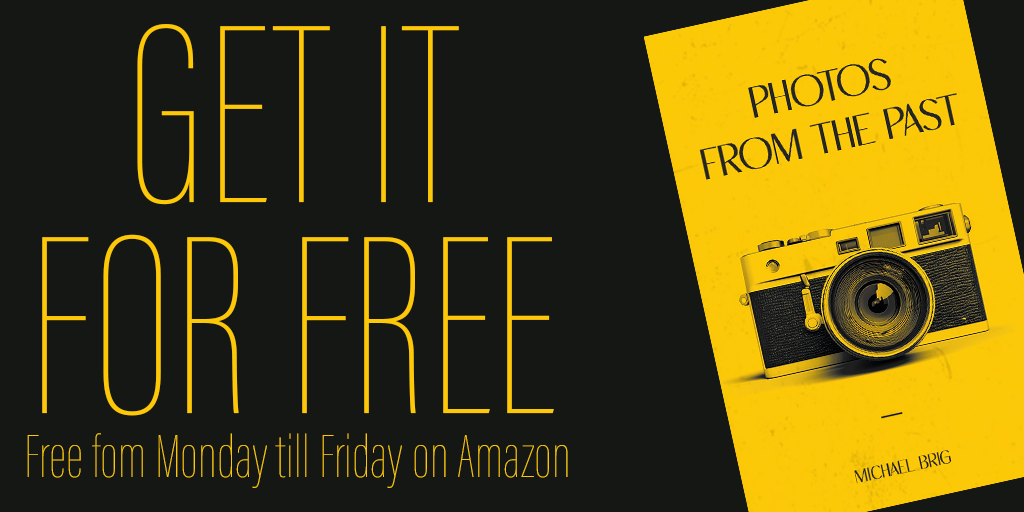
If you just want the book, you can sign up, download it, and unsubscribe. But if you stay, I’ll keep you updated on future free book giveaways on Amazon – another good incentive to join the list.

You can find it here: Endless by Michael Brig


Free Books

This part of my growth strategy came to a complete halt in September. I couldn’t find the time to publish new short stories. I’m still working on my STORY52 project (writing and publishing 52 short stories on Amazon KDP, with one free story given away each week), but I couldn’t keep up this month due to illness and other obligations.

The good news: I’ve already written 18 stories, with 7 published so far. New content is coming soon, and I’ll complete STORY52 within the next two years at the latest – that’s a promise.

Giving Short Stories Away (Without Announcing It)

One experiment I did manage: I set some of my already published stories to “free” on Amazon without telling anyone. Normally, I use this website and Twitter to spread the word – the newsletter will also help with that in the future.

The results? Downloads were noticeably lower without announcements. So even my small reach on Twitter and this blog makes a difference. Relying only on Amazon’s built-in system is not a good idea.


Writing

I still envision a system where I can release a new book every month. For now, my realistic 2025 goal is quarterly releases.

Writing itself is the easy part – editing and translating are much harder for me. Still, I should be able to publish at least one more book this year, ideally two.

Project Updates

  • Endless – Finished and published in September. The one big success of the month.
  • 17 Series – Part 5 is 90% written. Editing and translating the first release in the series is at 80%. Guaranteed release in late 2025 (November or December).
  • Therapy – Another finished novel. If things go well, I’ll edit and translate it in 2025.
  • Crowley – Finished in September, but a release is more likely in 2026.
  • Influencer – Currently outlining. Writing planned for 2025, release in 2026.

Once STORY52 is done, I’ll have more time to focus on novels. At first, I thought I could juggle weekly short stories and monthly novels, but that was overly ambitious. A more realistic target is 4–6 full novels per year, with short stories on the side.


X/Twitter

I want to become more active here. Since Twitter is mostly about politics, I’ll dive back into the mud – shitposting, clout farming, and riding viral trends included.

Still, I have to be careful: the German government loves suing people for criticism. (That’s life in a communist bureaucratic country.)

My target: around 10 tweets or comments per day to see if I can grow a following. Follow me here: Michael Brig on Twitter


Instagram

No changes.


YouTube

A bad month overall. I barely touched my channels. I need to get back on track with YouTube, even though the platform’s shadowbanning and censorship make it frustrating.

Alternatives like Rumble and Odysee just don’t compare in terms of reach. If they did some day, I’d go all in. But until another major censorship wave pushes more people off YouTube, I’ll have to keep dealing with its nonsense.


Conclusion

September was a slow month, mostly due to personal setbacks. But the mailing list is finally set up, and with that foundation in place, I’m ready to move forward with other projects.

Why I’m Going to Write Daily Blog Posts Now

I finally got my mailing list set up, which means I now have some extra time to spend on other things. I’ve decided that blogging will be my main focus for the moment, and daily blogging feels like the right approach.

I’m not an expert, and I barely have any readers here. So I’ve looked at what the so-called experts say who seem to have readers. And almost all of them advise: Don’t blog daily.

Their advice is to publish one big article a week—something like a massive 2,000-word authority post. But I think that’s bad advice. Hear me out:

About ten years ago, I started watching YouTube. I had gotten rid of my TV and was working online, so at some point I inevitably stumbled across YouTube. One of the first creators I started following was Casey Neistat.

Everyone knows him now, but when I first watched his vlogs, he probably had just 5% of the audience he has today. It’s hard to explain exactly why I kept watching, but one of the things that hooked me was his commitment to posting a new video every single day.

Back then, I knew nothing about video production, and I was amazed that one person could produce something of that quality within 24 hours. Even more impressive, he managed to do it for more than a year—without missing a single upload. It was crazy.

These days, Casey doesn’t vlog daily anymore. And honestly, I stopped watching him soon after he ended his daily vlog. Out of curiosity, I checked his channel again while writing this post: he now has over 12 million subscribers but uploads only about once a month. If I hadn’t looked him up, I would have forgotten he even existed.

And that’s exactly why I believe daily writing is the right move—at least for someone like me, who’s documenting an online project in real time.

  • If someone stumbles across my blog, they’ll know it’s worth checking in regularly, because there will always be something new.
  • Readers get to see my author journey unfold as it happens—raw and in real time.
  • Writing daily forces me to sit down and hammer out words, keeping me in a creative mindset while also improving my English.
  • People won’t forget about me. Just like I forgot Casey existed when he stopped showing up daily, readers will forget me too if I only post occasionally.

Sure, I won’t build a traditional “authority blog” with long mega posts. But that’s not my goal anyway. My goal is to find readers for my books, grow an audience along the way, and stay in the creative flow for as long as I live—hopefully for many decades to come.

Daily writing (or daily vlogging) has worked for nearly everyone I’ve followed over the years. So why not do the same myself?

I Like Seth Godin’s Approach to Blogging

When you’re famous, you can get away with breaking the rules.

I’ve read a fair bit about “how to blog” recently—those posts by internet marketers who hand out basic advice that most people with half a braincell can come up with instinctively. Then I thought about the blogs I actually enjoy reading, and I realized that the bloggers I follow pretty much ignore all the so-called rules.

Take Seth Godin, for example: Seth’s Blog
He’s in the marketing niche himself, but his blog completely disregards the most common advice like:

  • Use descriptive headline formulas like “How to…,” “I made $5,117.63 in 4 weeks—here’s how,” or “7 tricks experts recommend (number 6 will surprise you).”
  • Write long posts of 2,000+ words.
  • Publish one “authority post” a week instead of short daily opinion pieces.
  • Optimize everything for SEO.
  • Focus on specific long-tail keywords.
  • …and so on.

Seth Godin does none of that. In fact, he does the opposite: he writes every day, his posts are usually short, his headlines are often cryptic until you read the article, and there’s little evidence of SEO or keyword-specific writing anywhere.

Of course, he has a huge reputation and a loyal following built over decades of hard work. He can afford to do it “the wrong way”.

But here’s the question I keep coming back to: if he’s supposedly doing it wrong, why do I prefer reading his posts over the latest 2,000-word “authority” article from some self-proclaimed SEO expert?

Almost all the bloggers I read write primarily because they want to. Sure, they’ll cover trending topics when they’re relevant, but it never feels like they’re chasing keywords or thinking about covering niches. Their writing comes across as genuine—like they simply want to share an idea or opinion.

That kind of writing may not win over Google, but it wins over readers like me.

So shouldn’t I write the same way?

In the end, the reader is always the judge. But I’m fairly certain of this: I could happily keep writing for decades in Seth Godin’s style, while I’d probably burn out and lose interest in less than a year trying to follow the advice of the so-called blogging experts.

Life’s a Journey, Not a Destination (So Is Blogging)

I’ve been thinking a lot about AI lately. My website is small, my Twitter is mostly filled with follow-for-follow accounts, and my YouTube isn’t even worth mentioning. Still, I get flooded with spam.

It’s sad. But it’s also impressive.

Scammers have built massive automated systems that spray their nonsense into every corner of the internet—no matter how small.

The OnlyFans e-girl sphere slides into my DMs. The AI entrepreneurs fill my inbox. Political grifters want me to share their stuff. It’s everywhere, all the time. Before long, real, authentic content might make up just 1% of the internet—while the rest is bots and scammers trying to sell junk to each other.

That made me stop and ask myself: How do you even find an audience in an environment like this?

The only answer I can think of: do what the scammers don’t do.

What does that mean?

Here’s an altered version of the kind of email I get at least once a day: The best all-in-one AI solution to grow your business!

Scam products are always the best, the first, the ultimate, the final solution. The price is always free to join, the lowest, the best, discounted, limited-time only.

What you never see is: Watch us develop in real time. Give us feedback on our startup. Help us improve. See us fail until we succeed.

Scammers can only sell if it’s “the best,” “free to join,” and “only available for a limited time.” So they never advertise the real truth, they advertise only bullshit.

But I don’t have to play that game. I can tell you that I’m still learning, trying, testing, failing. I can write about the book that didn’t sell, the blog post no one read, the Twitter account nobody follows. By doing that, I become something AI never will: human.

Life’s a journey, not a destination, they say. The same goes for blogging—at least when you’re human. Plans fall apart, we fail more often than we succeed. Why not write about that too? Why not write about failing 99 times until the 100th try becomes a success?

I believe this isn’t just the future of blogging. It’s already the present.

The Mailing Service I Use For My Newsletter

Finding a mailing service that actually fit my (very basic) needs turned out to be a nerve-wracking process. After trying out about a dozen platforms over multiple weeks—and fully setting up a few of them—I finally settled on MailerLite.

This isn’t a sponsored recommendation. I just want to document what I’m doing as I try to build an audience for my writing. There may be even better options out there, and if I come across one, I will switch. But for now, MailerLite checked all the boxes I cared about:

  • A free entry-level plan
  • A built-in (and free) autoresponder
  • No overbearing marketing nonsense
  • An easy-to-use dashboard

Currently, MailerLite lets you use its service for free with up to 500 subscribers. I’m nowhere near that. At the moment, my mailing list has exactly two subscribers—both from personal connections.

I expect my numbers to stay low for months, maybe even years. That’s why I wasn’t looking for a pricey provider that would charge me $20 monthly just to send an email to two people—something I could easily do manually as well. If I ever grow a real audience and start making money from my work, I’ll happily pay. But until then, I don’t want to fund my writing project with money from other projects. So free was a must.

The biggest dealbreaker with most services was their so-called “free tier.” Many offered it, but without an autoresponder. I specifically needed an autoresponder so that new subscribers would automatically receive a free book I’ve written exclusively for them, called Endless.

For example, Mailchimp doesn’t include an autoresponder unless you’re on a paid plan, even if you only have a handful of subscribers. MailerLite, fortunately, does.

Another point that mattered to me: I didn’t want to be bombarded with marketing and sales pitches the moment I signed up. The worst experience I had was with a service called Kit. On paper, it seemed perfect—free plan, autoresponder included, easy setup. I spent about an hour getting everything ready, only for them to lock my account after the setup until I scheduled a mandatory sales chat with one of their reps. My entire setup was deactivated until I listened to their pitch for a paid plan. Honestly, that was one of the most disgusting business practices I’ve ever seen. My advice: avoid Kit completely.

So far, MailerLite hasn’t annoyed me once. Setup was smooth, everything works, it just does what I need it to do, and it’s all free.

For now, if you’re starting out and looking for a mailing service for your own list, I can recommend: MailerLite