Netflix Buys Warner Bros

I actually received an email from Netflix announcing the takeover two days ago. It seems they’ve been flooded with messages from users asking about potential changes to the platform after the announcement that Warner Bros had been acquired.

The email didn’t offer any real details. It basically said: No changes are coming to Netflix for now, but we’re excited… — the usual corporate fluff.

Some people are saying lawsuits might block the deal on monopoly grounds. Others claim Paramount is trying to outbid Netflix again. And even Trump has been quoted as wanting to block the acquisition with an executive order or something along those lines.

I have no idea how this will ultimately play out. But for now, it really does look like Netflix has bought WB and all of its incredible IPs.

If the deal holds, it’s the right move for Netflix and the audience.

Netflix’s biggest problem is the quality of its original productions. For every Squid Game, Stranger Things, or The Last Samurai Standing, we get fifty mediocre shows nobody watches. Their strategy seems to be producing as much as possible and throwing it at the audience to see which handful deserve a second season.

HBO does it better.

How many valuable IPs has Netflix created on its own? Not many. HBO has created far more, with far fewer resources. Now, Netflix hasn’t only bought existing IPs (like Game of Thrones, The Sopranos, Curb Your Enthusiasm, etc.) — they’ve acquired the company that created them.

Then there are the movies: most Netflix films are mediocre, some are decent, and only a few are genuinely good or great (like Knives Out). Meanwhile, Warner has delivered Harry Potter, The Matrix, the DC movies, The Lord of the Rings, and countless standalone classics that belong on any “1,000 movies to watch before you die” list. In short, WB has produced far better films than Netflix ever has.

Finally, Netflix might be gaining full access to the Warner back catalogue. The biggest issue with most streaming services is the lack of classic films. I enjoy watching older movies — I don’t even mind black and white. Warner has been producing films for over 100 years. If Netflix gets that entire catalogue on its platform, that alone would justify a subscription for me.

Sure, Hollywood isn’t thrilled, since it’s another blow to traditional theatrical releases. But honestly, going to the cinema just isn’t as fun as it used to be. Prices are too high, audiences can be annoying, and many movies simply aren’t worth the trip anymore. I’m perfectly fine waiting for theatrical releases to hit streaming — it’s more convenient, less stressful, and honestly safer as the streets are getting more dangerous.

Netflix might raise prices, but HBO Max might disappear, which could balance things out.

So far, I don’t see many downsides for users or audiences — while the potential advantages are pretty significant on paper.

Let’s see how things unfold over the next few months.
I Miss Baywatch (Movie/Show Review #10)

When Baywatch first aired in Germany, I wasn’t even ten years old. David Hasselhoff was already a big star thanks to Knight Rider, but Baywatch made him the biggest TV icon of that era.

The very first episode hooked me right away. The stories were simple, and the characters were all slight variations of the same good-hearted person who wants to do the right thing—sometimes failing until a friend steps in to help.

Of course, Baywatch became a global phenomenon largely because of its beautiful women. Erika Eleniak was a perfect ten, portraying the kind, loving, and caring Shauni McLane. When she left the show, Pamela Anderson rose to international stardom as C.J. Parker. Over the years, actresses like Yasmine Bleeth and Nicole Eggert were stunning additions to the cast. For the female audience, the producers also cast plenty of ripped male models.

But as a teenager, I never saw Baywatch as the “soft p**n” it might have been intended to be from the start. I liked the characters, the beach scenes, the sunshine, and the overall kindness of the show. Sure, the stories never evolved toward any real complexity; there was basically no character development, and you could predict the ending after the opening credits.

Yet it was entertaining. It was heart-warming. It was simply nice TV.

The world of Baywatch was uncomplicated and good: beautiful people, beautiful friendships, and big, beautiful hearts.

I wanted to live in that world. I still do. Today’s world makes me long even more for that idealized early-90s California beachfront life.

Our current world is dark, dangerous, and depressing—which is why so many shows today are dark, dangerous, and depressing too. I wish we could go back to a time when we were still allowed to dream of a life that looked like Baywatch—and be naive enough to believe that such a life could come true.

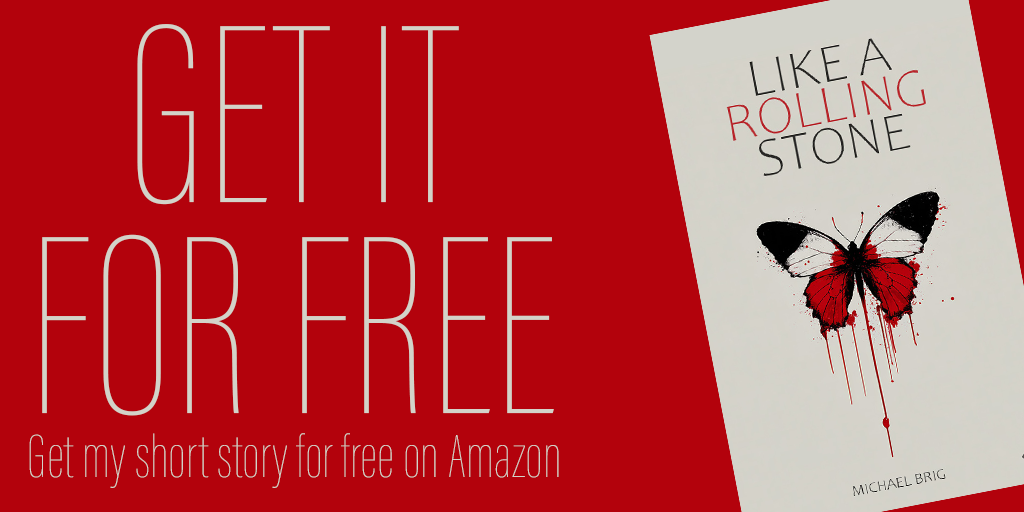
My New Book “Like A Rolling Stone” Is Available For FREE This Week (in German)

I finally finished editing the German version. You can now get it on Amazon for free until Friday.

It’s the first book of a series that I want to expand with a new release each year until I kick the bucket. The genre: Action-Thriller with a mix of conspiracy.

You can get your copy here: Like A Rolling Stone (German Edition)

The next couple of days I’ll work on the English translation. The goal is to have it ready before Christmas and give it away for free too. Just follow my blog to not miss the release.

As always, if you enjoyed reading my stories, please leave me a review on the platform of Lauren Sanchez’ husband. Thanks.

I Think I’m Never Going to Buy a New Car Ever Again

Last week, the German car manufacturer Porsche reportedly immobilized hundreds of cars in Russia using its VTS (source).

They haven’t officially confirmed it yet, but it would be an unbelievable coincidence for so many Porsche vehicles to stop working on the same day—December 1st—and in the same country.

Some say it might have been a software update gone wrong rather than intentional sabotage, but in the end, it doesn’t even matter. What matters is that Porsche appears to be able to shut down your car with the push of a button from a computer on the other side of the planet.

The VTS—Vehicle Tracking System—is connected via satellite and can automatically trigger an engine immobilizer. “All models and all engine types” are reportedly affected.

And that raises the question: what’s stopping the government from using such a system to switch off your vehicle if you haven’t paid enough taxes, or in the name of a climate emergency?

Nothing.

The only way to protect yourself is to buy cars that don’t have a VTS or any other satellite connection.

This whole incident raises a bigger question: why do cars even need an internet connection in the first place? You already have a smartphone that can serve as a navigation system or information device. The only real reason is that manufacturers want our data, and governments want another tool to restrict our freedom.

All these so-called “smart” devices aren’t actually helping users at all. Cars, washing machines, refrigerators—everything now has to be smart and connected, yet barely anything truly improves the user experience.

The future might very well bring a massive demand for “dumb” devices that aren’t connected to anything.

Publish Everything That You’ve Finished Writing

I was hesitant to publish my first book in 2023. In fact, I was so hesitant that I kept it on my computer for years, even though it was already finished. I felt the same hesitation with my second book in 2024—and my third in 2024 as well. I guess, that feeling of “It’s not good enough” never really goes away.

After publishing three books and nearly a dozen short stories, I’ve come to an important conclusion: if you aim for perfection, you will never publish anything. Of course you should try to produce your best work, but if you obsess over perfection, no sentence will ever feel good enough—and you’ll never release anything at all.

What’s better: publishing a book that is “good enough,” or never publishing a book because it isn’t perfect?

Another thing to keep in mind is that even if you did reach perfection, some readers would still disagree. There are people on Amazon who give The Lord of the Rings one-star reviews. There are people who downvote YouTube videos of babies playing with puppies. Some crazy people rate Christopher Nolan movies 1 out of 10.

The lesson here is: Your idea of perfection will never be everyone’s perfection.

Since universal perfection is impossible, why try to reach it? Aim for creating a book that is good—and then release it instead.

With all of this in mind, I’ve established my third iron rule of writing: If something is finished, publish it. If you don’t, you’ll get stuck in editing limbo, endlessly trying to “fix” something that can’t be fixed anyway.

To sum up the iron rules so far:

  1. Collect all ideas.
  2. Work on one idea until you have a first draft.
  3. Publish everything that is finished.