A Lesson from Wake Up Dead Man

I watched the third installment of the Knives Out franchise yesterday—and I liked it. It’s a good movie, and even one of the better films of the year. It’s obvious that everyone involved had a lot of fun making it, and that Rian Johnson is a smart writer.

Yes, he messed up Star Wars—but only because Kathleen Kennedy allowed him to. Johnson’s filmography proves time and again that he can write clever, original stories. Wake Up Dead Man is a great example of his ability to deliver smart, well-constructed plotlines.

That said, the one thing that almost made me give up on the movie was the first act. It’s simply too long. More than half an hour passes before we get the first murder victim. After that, the movie really picks up steam and keeps you on the edge of your seat. At times, it’s downright brilliant—just like the first two Knives Out films. But I can imagine some viewers dropping out during the first act because it drags a bit.

The best way to get people interested in your story is to start with a bang. Throw the audience straight into the action—just like Tom Cruise does in every Mission: Impossible movie.

Of course, you need to develop the plot and characters at some point, or you won’t have a story at all. But first, you have to capture the audience’s attention before they’re willing to invest in your character and plot development.

As great as Wake Up Dead Man is, I would have started with the murder and then used flashbacks to convey the plot and character development that’s crammed into the first act.

Still, I liked the movie—a lot—and I highly recommend watching it.
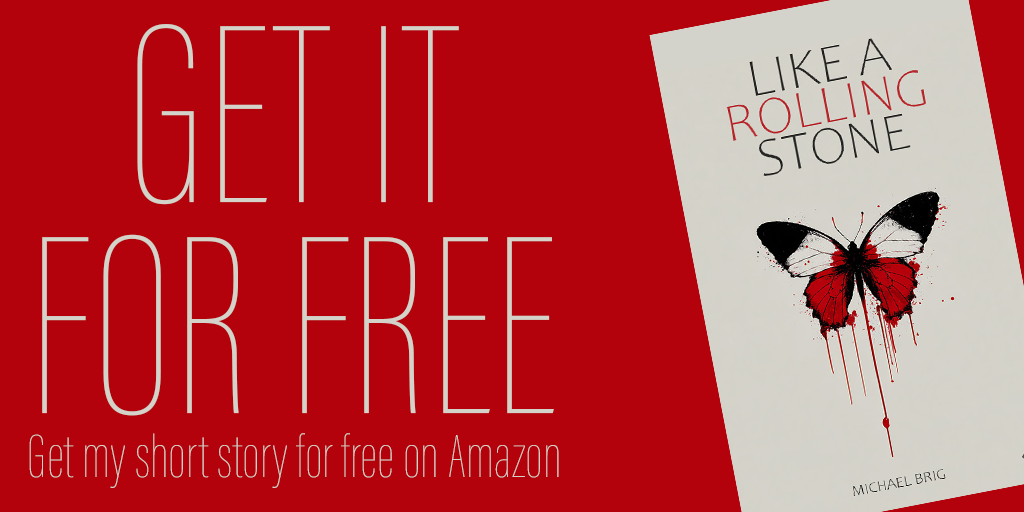
My New Book “Like A Rolling Stone” Is Available For FREE This Week (in German)

I finally finished editing the German version. You can now get it on Amazon for free until Friday.

It’s the first book of a series that I want to expand with a new release each year until I kick the bucket. The genre: Action-Thriller with a mix of conspiracy.

You can get your copy here: Like A Rolling Stone (German Edition)

The next couple of days I’ll work on the English translation. The goal is to have it ready before Christmas and give it away for free too. Just follow my blog to not miss the release.

As always, if you enjoyed reading my stories, please leave me a review on the platform of Lauren Sanchez’ husband. Thanks.

Publish Everything That You’ve Finished Writing

I was hesitant to publish my first book in 2023. In fact, I was so hesitant that I kept it on my computer for years, even though it was already finished. I felt the same hesitation with my second book in 2024—and my third in 2024 as well. I guess, that feeling of “It’s not good enough” never really goes away.

After publishing three books and nearly a dozen short stories, I’ve come to an important conclusion: if you aim for perfection, you will never publish anything. Of course you should try to produce your best work, but if you obsess over perfection, no sentence will ever feel good enough—and you’ll never release anything at all.

What’s better: publishing a book that is “good enough,” or never publishing a book because it isn’t perfect?

Another thing to keep in mind is that even if you did reach perfection, some readers would still disagree. There are people on Amazon who give The Lord of the Rings one-star reviews. There are people who downvote YouTube videos of babies playing with puppies. Some crazy people rate Christopher Nolan movies 1 out of 10.

The lesson here is: Your idea of perfection will never be everyone’s perfection.

Since universal perfection is impossible, why try to reach it? Aim for creating a book that is good—and then release it instead.

With all of this in mind, I’ve established my third iron rule of writing: If something is finished, publish it. If you don’t, you’ll get stuck in editing limbo, endlessly trying to “fix” something that can’t be fixed anyway.

To sum up the iron rules so far:

  1. Collect all ideas.
  2. Work on one idea until you have a first draft.
  3. Publish everything that is finished.

The Main Difference Between a Personal and a Corporate Blog

More than ten years ago, I ran a freelancing service that included writing SEO articles for German websites. I wrote about crypto, fitness, event hotels, gardening, and many other topics. The goal was always the same for every client: write as many articles as possible to cover the three or four main keywords from every possible angle.

In fitness, for example, that meant keywords like:

  • Lose weight
  • Build muscle

So I was asked to write article after article from that perspective, such as:

  • How to lose weight with strength training
  • How to lose weight with running
  • How to lose weight with low-carb
  • How to lose weight with intermittent fasting
  • How to lose weight…

You get the idea.

At some point, I had covered every topic I could think of. So the client simply wanted me to repeat myself, just with slightly different long-tail keywords:

  • How to lose weight with low-carb
  • Losing weight with low-carb
  • Is losing weight with low-carb possible?
  • What is the most efficient way to lose weight with low-carb?

Naturally, this led to articles that recycled the same old information. Eventually, I could just take the articles I had already written, rephrase them a bit, and change a few key sentences to include the new long-tail keywords.

It was boring. It was ridiculous. But it paid the bills.

Thanks to that experience, I’ve become very attentive when reading other people’s blogs. Whenever I see this repetitive structure, I know I’m not reading a genuine, authentic blogger who wants a space to share ideas. Instead, I’m looking at a corporate blog that exists solely to cover keywords for Google.

And the only thing I’ll get out of reading it is the same repetitive stuff I already learned from the first handful of posts on that site. So I’m out. Bye.

Personal blogs might be harder to rank on Google, but once you find them, you discover new ideas, new opinions, and new topics for as long as you follow them. That’s what I like. That’s what I’m interested in. And that’s what is easily identifiable by simple looking for blogs that don’t write this repetitive keyword shit.

I Don’t Believe Writer’s Block Exists

This year, I set a goal to write at least one thousand words every day. So far, I’ve managed to stick to it. On most days, I wrote even more. Writing stories for my books and articles for this website give me a strong reason to keep going—and once you do it long enough, habit takes over.

I don’t even think about whether I should write today; I just do it, because I’ve done it long enough that it has become a natural part of my daily routine.

So, does writer’s block exist? I don’t think so. At least I’ve never experienced it.

If I look at writing from the perspective of quantity, the only times I get stuck are when I start thinking too much about quality. Not every article I write and not every page of a book is perfect. Sometimes I even write complete trash.

But writing trash can still lead to quality. Here’s why: if you can’t produce something good today and you stop writing, you certainly won’t create anything of value tomorrow. But if you keep writing—even if it’s garbage—quantity will lead to quality almost automatically because you keep putting words on paper.

If you try writing 1K a day for an entire year, you will learn something about writing. Even if you only learn it subconsciously. And this will improve your quality afterwards. So just writing more and more will make you better. You only have to stick with it and never give up.

Here are a few guidelines I use to continue writing daily:

  • When I write fiction, I follow one rule only: just write, without editing. Editing is only allowed after the writing part is finished.
  • When I get an idea for a story, I write it down, no matter whether it seems good or not. When I finish a story, I review my swipe file and choose the next idea that’s promising enough for a book or a blog post.
  • When I write non-fiction, I always create a simple outline before I start which are basically just sub-headlines. Writing then becomes a matter of connecting the headlines I planned in advance.
  • I keep a swipe file for non-fiction as well, so I never run out of blog post ideas. It already contains more concepts than I could possibly turn into articles in my lifetime.
  • Use ChatGPT for feedback: You can’t type in “write me a book” and expect good results. But you can use ChatGPT as a Beta reader who is always available and delivers quick and targeted feedback.

These guidelines have helped me avoid writer’s block entirely. I can confidently say I haven’t experienced it once this year. And I’m convinced you won’t either if you follow these four simple rules.