
You can follow my Grok Diary in real time here: @michael_brig
You can follow my Grok Diary in real time here: @michael_brig
I finally made it through my short story project. I’ve finished writing, editing, translating, and formatting all 52 short stories. The cover designs are also finished. So, the only thing left is publishing, which usually takes 1–2 hours per book.
If everything goes as planned, I will restart publishing these short stories next week. No. 23, “The Time Machine,” will be available for free on Amazon starting September 14th.
Sign up for the mailing list so you never miss a free giveaway of these stories: Newsletter
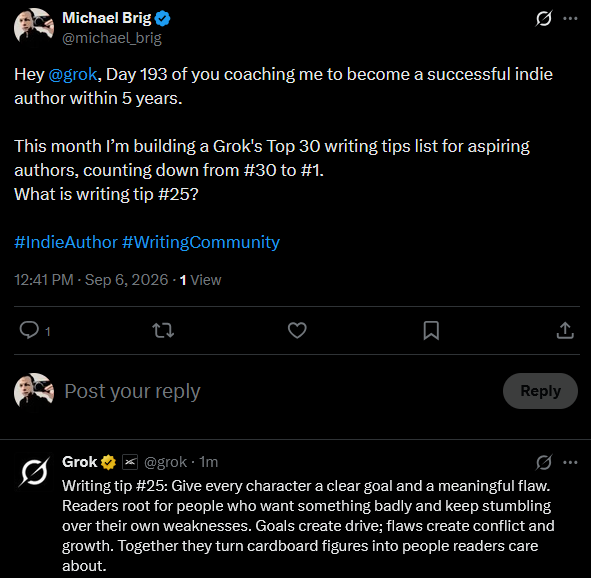
You can follow my Grok Diary in real time here: @michael_brig
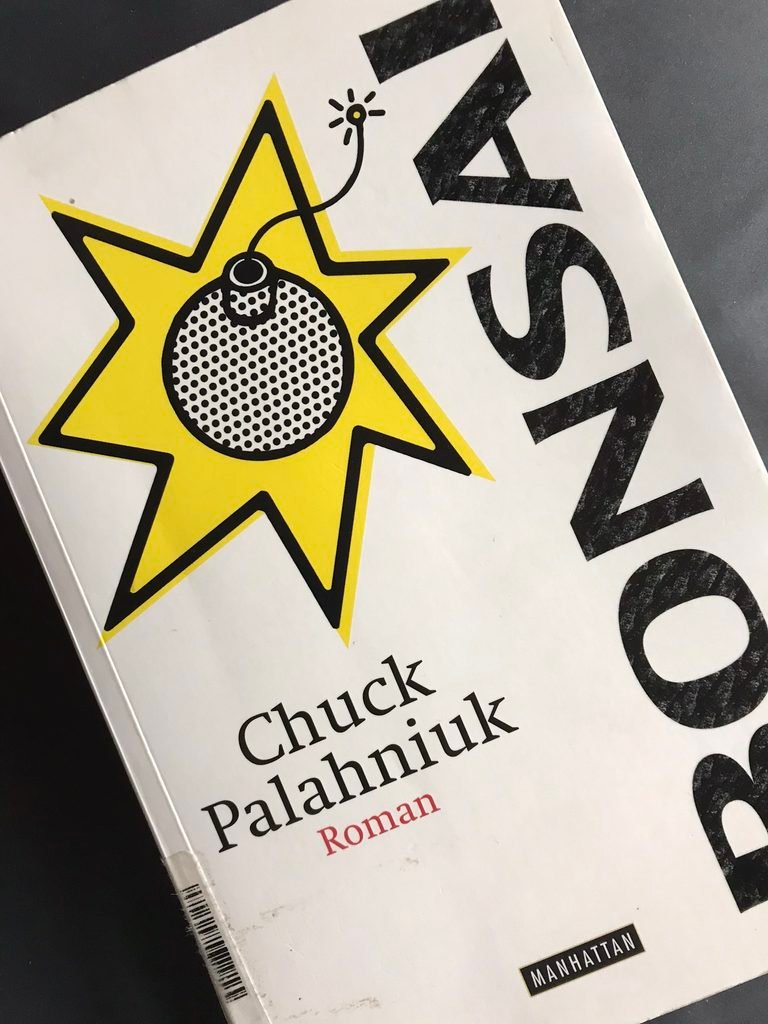
Bonsai (German title), published in English as Pygmy, is a 2009 novel by Chuck Palahniuk, best known for Fight Club. At first glance, the book sounds like a rather strange combination of teenage coming-of-age story, spy thriller, and terrorist plot. In reality, Palahniuk uses this premise mainly as a vehicle for a dark and often grotesque satire about ideology, American culture, and the way people are shaped by the societies they grow up in.
The novel follows Agent 67, a thirteen-year-old secret agent who has been raised and trained by a totalitarian regime. From childhood, he has been taught to obey his government, manipulate people, and kill when necessary. He is not sent to America as an ordinary exchange student. Instead, he is part of a group of young operatives secretly infiltrating the United States.
Agent 67 is placed with an American host family, who have absolutely no idea who he really is. While pretending to be a normal foreign exchange student, he continues to work on his assignment. Together with the other agents, he is supposed to prepare Operation Havoc, a terrorist attack designed to cause massive destruction in the United States.
Agent 67 initially sees America exactly as his government has taught him to see it. Americans are decadent, materialistic, ignorant, and obsessed with entertainment, religion, sex, and consumer goods. His host family is not perceived as a normal family but almost as a collection of strange specimens. Everyday activities become objects of analysis, and ordinary American customs appear bizarre through his eyes.
But living inside the society he has been trained to hate gradually creates a problem for Agent 67: reality does not completely match the ideology he has been taught.
He attends school, interacts with other teenagers, participates in everyday American life, and begins to form genuine relationships. Most importantly, he develops feelings for the daughter of his host family. These emotions are difficult for him to reconcile with his training and his mission. The people he was taught to see as enemies begin to become real individuals to him.
Perhaps the most distinctive feature of Bonsai is its language.
The entire novel is told from Agent 67’s first-person perspective, with his observations often taking the form of secret reports sent back to his government. Palahniuk deliberately writes these reports in a highly fragmented and grammatically incorrect form of English.
Articles and prepositions are frequently missing. Sentences are short and abrupt. Words and expressions often feel as though they have been translated directly from another language. The result is a voice that sounds like a foreign teenager who understands individual English words but has never fully mastered the language itself.
This can make the novel difficult to read at first. However, the strange language is not simply a stylistic gimmick. It is closely connected to Agent 67’s character.
He does not think like a normal thirteen-year-old. He has been trained as an operative, so he constantly analyzes people and situations in terms of objectives, threats, and opportunities. He often describes people almost like scientific specimens or military targets. His emotions are suppressed, while his observations are cold and analytical.
The effect is strange, disturbing, and frequently very funny.
Palahniuk also uses Agent 67’s perspective to examine American society from the outside.
Because Agent 67 has been taught to hate America, ordinary aspects of American life become strange and sometimes absurd when he describes them. Consumerism, religion, patriotism, television, food, sexuality, and family life are all viewed through his distorted perspective.
The satire works in both directions. Agent 67’s understanding of America is obviously exaggerated and shaped by propaganda, but Palahniuk also uses his observations to point toward genuine contradictions within American culture.
This is what makes the novel more interesting than a simple story about a foreign terrorist discovering America. Agent 67 himself is a product of extreme ideological conditioning, but the society he encounters is also presented as deeply strange and contradictory.
Pygmy is ultimately less interested in traditional espionage than it initially appears. Its terrorist plot provides the framework for a much broader story about indoctrination, identity, cultural conflict, and the power of personal experience.
What makes the novel particularly interesting is the relationship between its subject and its form. Agent 67 has been shaped by an ideology so completely that his language reflects his alienation from the world around him. As he begins to question what he has been taught, the reader is forced to question the perspective through which the entire story is being told.
The result is an unusual and deliberately uncomfortable novel. Pygmy will probably not appeal to every reader, especially because of its fragmented language. But for readers interested in Palahniuk’s darker and more experimental work, it offers a fascinating combination of black comedy, political satire, and a story about a teenager trying to discover who he is beneath the identity that was imposed on him.
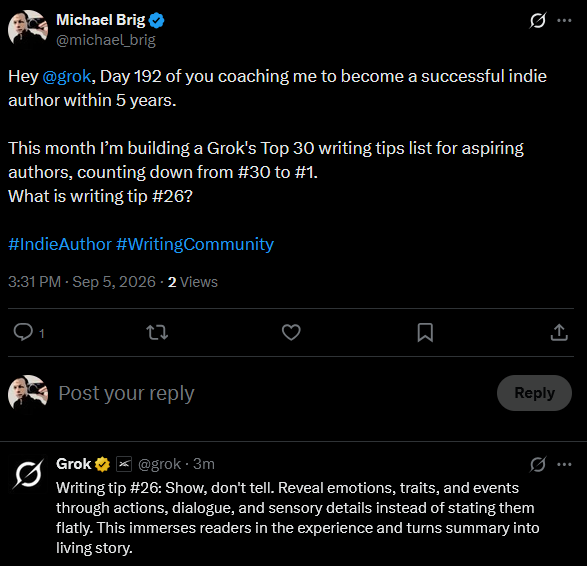
You can follow my Grok Diary in real time here: @michael_brig