I Miss Baywatch (Movie/Show Review #10)

When Baywatch first aired in Germany, I wasn’t even ten years old. David Hasselhoff was already a big star thanks to Knight Rider, but Baywatch made him the biggest TV icon of that era.

The very first episode hooked me right away. The stories were simple, and the characters were all slight variations of the same good-hearted person who wants to do the right thing—sometimes failing until a friend steps in to help.

Of course, Baywatch became a global phenomenon largely because of its beautiful women. Erika Eleniak was a perfect ten, portraying the kind, loving, and caring Shauni McLane. When she left the show, Pamela Anderson rose to international stardom as C.J. Parker. Over the years, actresses like Yasmine Bleeth and Nicole Eggert were stunning additions to the cast. For the female audience, the producers also cast plenty of ripped male models.

But as a teenager, I never saw Baywatch as the “soft p**n” it might have been intended to be from the start. I liked the characters, the beach scenes, the sunshine, and the overall kindness of the show. Sure, the stories never evolved toward any real complexity; there was basically no character development, and you could predict the ending after the opening credits.

Yet it was entertaining. It was heart-warming. It was simply nice TV.

The world of Baywatch was uncomplicated and good: beautiful people, beautiful friendships, and big, beautiful hearts.

I wanted to live in that world. I still do. Today’s world makes me long even more for that idealized early-90s California beachfront life.

Our current world is dark, dangerous, and depressing—which is why so many shows today are dark, dangerous, and depressing too. I wish we could go back to a time when we were still allowed to dream of a life that looked like Baywatch—and be naive enough to believe that such a life could come true.

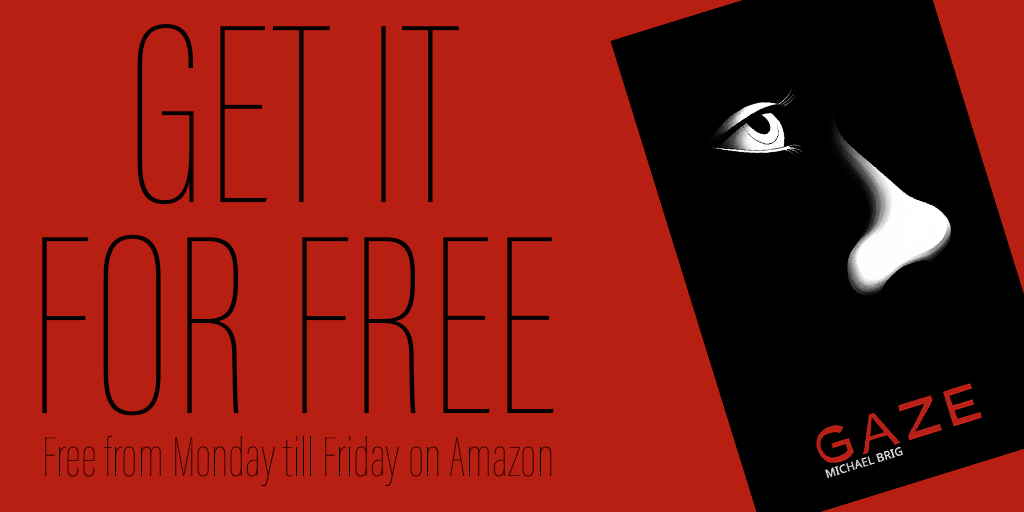
My New Book “Like A Rolling Stone” Is Available For FREE This Week (in German)

I finally finished editing the German version. You can now get it on Amazon for free until Friday.

It’s the first book of a series that I want to expand with a new release each year until I kick the bucket. The genre: Action-Thriller with a mix of conspiracy.

You can get your copy here: Like A Rolling Stone (German Edition)

The next couple of days I’ll work on the English translation. The goal is to have it ready before Christmas and give it away for free too. Just follow my blog to not miss the release.

As always, if you enjoyed reading my stories, please leave me a review on the platform of Lauren Sanchez’ husband. Thanks.

I Think I’m Never Going to Buy a New Car Ever Again

Last week, the German car manufacturer Porsche reportedly immobilized hundreds of cars in Russia using its VTS (source).

They haven’t officially confirmed it yet, but it would be an unbelievable coincidence for so many Porsche vehicles to stop working on the same day—December 1st—and in the same country.

Some say it might have been a software update gone wrong rather than intentional sabotage, but in the end, it doesn’t even matter. What matters is that Porsche appears to be able to shut down your car with the push of a button from a computer on the other side of the planet.

The VTS—Vehicle Tracking System—is connected via satellite and can automatically trigger an engine immobilizer. “All models and all engine types” are reportedly affected.

And that raises the question: what’s stopping the government from using such a system to switch off your vehicle if you haven’t paid enough taxes, or in the name of a climate emergency?

Nothing.

The only way to protect yourself is to buy cars that don’t have a VTS or any other satellite connection.

This whole incident raises a bigger question: why do cars even need an internet connection in the first place? You already have a smartphone that can serve as a navigation system or information device. The only real reason is that manufacturers want our data, and governments want another tool to restrict our freedom.

All these so-called “smart” devices aren’t actually helping users at all. Cars, washing machines, refrigerators—everything now has to be smart and connected, yet barely anything truly improves the user experience.

The future might very well bring a massive demand for “dumb” devices that aren’t connected to anything.

Publish Everything That You’ve Finished Writing

I was hesitant to publish my first book in 2023. In fact, I was so hesitant that I kept it on my computer for years, even though it was already finished. I felt the same hesitation with my second book in 2024—and my third in 2024 as well. I guess, that feeling of “It’s not good enough” never really goes away.

After publishing three books and nearly a dozen short stories, I’ve come to an important conclusion: if you aim for perfection, you will never publish anything. Of course you should try to produce your best work, but if you obsess over perfection, no sentence will ever feel good enough—and you’ll never release anything at all.

What’s better: publishing a book that is “good enough,” or never publishing a book because it isn’t perfect?

Another thing to keep in mind is that even if you did reach perfection, some readers would still disagree. There are people on Amazon who give The Lord of the Rings one-star reviews. There are people who downvote YouTube videos of babies playing with puppies. Some crazy people rate Christopher Nolan movies 1 out of 10.

The lesson here is: Your idea of perfection will never be everyone’s perfection.

Since universal perfection is impossible, why try to reach it? Aim for creating a book that is good—and then release it instead.

With all of this in mind, I’ve established my third iron rule of writing: If something is finished, publish it. If you don’t, you’ll get stuck in editing limbo, endlessly trying to “fix” something that can’t be fixed anyway.

To sum up the iron rules so far:

  1. Collect all ideas.
  2. Work on one idea until you have a first draft.
  3. Publish everything that is finished.

Erewhon by Samuel Butler (Books to Read #8)

Erewhon is often mentioned as one of the books that influenced George Orwell while writing 1984. It tells the story of a traveler who discovers a remote, hidden country where society follows a strange set of inverted moral values and unconventional customs. What begins like an adventure quickly turns into a satirical exploration of culture, morality, religion, and technology.

The book itself can be a challenging read. The style is dated, which makes it harder to get through, and other authors in the dystopian genre have certainly executed similar ideas more effectively. But it’s worth remembering that Erewhon, published in 1872, came long before dystopian fiction became a recognized genre. For its time, it was genuinely innovative, and deserves recognition for that lone.

One of the most interesting parts is the medical system in Erewhon, where illness is treated as a crime. The sick are considered morally at fault, so instead of receiving medical care, they are taken to court and judged. Meanwhile, actual crimes such as theft are viewed not as moral failings but as diseases that require compassionate treatment from doctors.

This inversion is sharp satire, and parts of it feel surprisingly relevant today. Our own society increasingly treats criminal behavior as something to be “cured” through therapy and rehabilitation rather than punished, often surrounding offenders with sympathy. Yet during the pandemic, people who refused vaccination were met with hostility and even threats of legal consequences, with very little public empathy.

Butler exposes how arbitrary and inconsistent the moral framework of the Victorian era and still (100 years later) our societal moral framework can be.

If you’re interested in early dystopian literature or in sharp social satire, Erewhon is definitely worth exploring. You can read it for free online here.