Alien: Earth (Movie/Show Review #8)

I’m a fan of the Alien franchise. Sure, it’s been a bit repetitive since the first sequel, but the second and third movies still added a lot to the lore. I also appreciated Prometheus as an ambitious attempt to provide a deeper backstory as well.

When they announced a show as the next installment, I was a little excited to watch it — though it took me months to finally find the time. But here we are.

Alien: Earth sticks to the dirty, realistic future style established by James Cameron, and it gives us another xenomorph running amok. But that’s basically where the similarities end. Narratively, the show goes in a completely new direction.

As much as you could criticize the repetitiveness of, for example, Alien: Romulus, you could now also criticize Earth for straying so far from its origins. It’s tricky to critique Earth for trying something new while also criticizing Romulus for not doing anything new at all.

But halfway through, I found myself asking: would I enjoy watching this if it wasn’t part of the Alien franchise? The answer I came up with was… maybe not.

The production quality is excellent. The xenomorph and other monster animations are fantastic, and I appreciated that the show didn’t tone down the horror or gore to make it more family-friendly.

But the storyline sidelines the alien in favor of a group of synthetic kids turning against humanity. Again, I can’t fault the show for trying something new while criticizing Alien: Romulus for sticking too closely to old ideas. Still, it sometimes feels like someone wrote a story that had little to do with the original Alien, then realized it might not attract viewers without the franchise name attached.

I’d still rate it 6 out of 10. I enjoy sci-fi and robot stories, and there’s at least one episode that feels like classic Alien. But for a show called Alien, I expected more.

Killtime For FREE This Week (STORY52 No. 9/52)

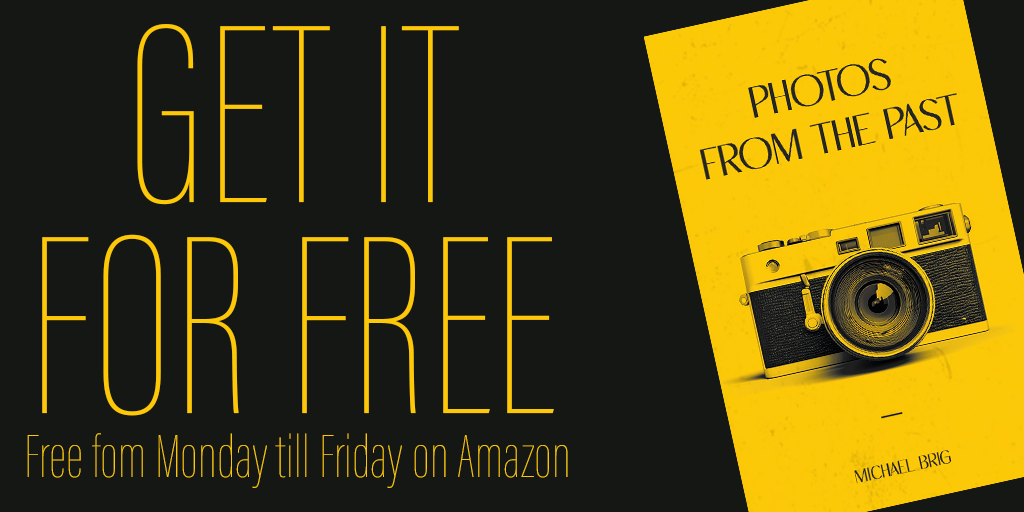
The next short story is published. You can get “Killtime” for free until Friday on Amazon:

In the shadows of a future where attention is the only currency, a man hunts for what everyone craves—clicks, followers, fame. And there’s only one way to get it: the next kill.

Killtime is a darkly satirical short story by Michael Brig — approximately 1,100 words.

US Version | https://www.amazon.com/dp/B0G3J1S4YS
German Version | https://amazon.de/dp/B0FXS9YM9N

As always there might be some delay with the free promo depending on the country that you live in, but it should be set to free today until the promo runs out on Friday.

If you liked it, please leave me a review on Amazon, thanks.

Week 48/2025 YouTube Videos

I only had time for one video this week. I’ll promise to do better next time.

StoryLines

Have you seen Last Samurai Standing? It’s good. But it also serves as another example for why Netflix hasn’t made entertainment better compared to the good old TV days.

Why Hollywood Movies Keep Bombing

I stumbled upon this article by the New York Times. It’s behind a paywall, so don’t bother with the link if you don’t have a subscription. It discusses the recent trend of Hollywood movies bombing heavily, despite having plenty of “stars.”

Things like streaming, Marvel fatigue, the lingering shockwaves of Covid, and even inflation are often cited as reasons why modern movies underperform at the box office. Some people even argue that “wokism,” which they claim injects every story with a political agenda, is to blame.

Recent entries on the list of box-office failures include:

  1. After the Hunt
  2. Bugonia
  3. The Smashing Machine
  4. One Battle After Another
  5. Ballerina
  6. Snow White

I’ve already shared my opinion on why Amsterdam flopped a couple of years ago, despite having a massive all-star cast.

But I want to add one reason for current movie failures that I’ve never seen anyone mention: globalism.

Globalism has shifted the market from culturally isolated to multicultural. As a result, companies now design their products for a global audience. The problem is: if you try to make something for everyone, you end up targeting the lowest common denominator — which usually leads to a product that feels low-quality or generic to everyone.

In the world of movies, that looks like this: Imagine a film made for young men — primarily Western men — in the 1980s. You’re probably thinking about car chases, explosions, an action thriller starring Arnold Schwarzenegger, directed by James Cameron, John McTiernan, or Richard Donner. Maybe Mel Gibson shows up in the final act to save the day.

Now imagine a 1990s movie made for women — Western women, younger, maybe married or engaged. You’re likely picturing Meg Ryan in a Nora Ephron film. She falls in love with Tom Hanks, and every few scenes there’s a harmless little joke to ease the tension.

Filmmakers in the past knew exactly which demographic they were targeting. That’s why those movies worked — not just at the box office, but artistically as well.

But today’s filmmakers have decided they want to make movies for everyone. It’s like making a rom-com and casting Arnold Schwarzenegger as the lead. Or making an ’80s-style action flick and casting Charlize Theron or Ana de Armas as the hero (both of which literally happened).

And that’s still not enough for a global audience. “Representation” has to be included, no matter what. We need a gay character, a trans character, someone who’s Muslim, the Asian guy has to be the action star, and of course we need an Indian comedic side character. Where’s the mixed-race couple that shows how tolerant we are? And naturally, the one group it’s acceptable to offend — white heterosexual males — has to be the villain.

The result is a Frankenstein movie designed to please all demographics and cultures while being terrified to take any risks.

By trying to pander to everyone, Hollywood is getting almost no one into theaters anymore.

The only way to fix this — and bring people back to theaters — is to make highly targeted niche films again. Instead of producing a $100 million blockbuster for everyone (that no one watches), make ten $10 million niche films. You’ll attract ten different target demographics, and at the very least you’ll recoup your investment. Every now and then, one of those smaller films will go viral — your $10 million investment becomes a $100 million success.

That’s how Hollywood used to operate. And I don’t see any good reason why they couldn’t return to that business model.

Finish What You’ve Started Writing. Always.

This week, I had a bit of an epiphany. I’d just completed my STORY52 project and had to decide what to work on next. I started with four different ideas, and after writing two pages for each, none of them clicked. So I abandoned all of them.

However, abandoning them didn’t free my mind. It didn’t help me think about the next idea or dive into a new project clearheaded. Instead, my thoughts kept circling back to the ideas I had tossed aside. I kept asking myself: Should I return to them? Is there something in those ideas worth exploring after all?

I realized soon after that most story ideas will stick with you forever—until you finally flesh them out into full stories. The 52 short stories I wrote for STORY52 are on paper and therefore out of my head. But the four ideas I deemed “not good enough” are still lurking in the depths of my mind, creeping around a dark corner to remind me of their existence whenever I start thinking about writing something else.

The only way to get these idea-creatures out of my head is to actually work on them. Even if there are better ideas in my swipe file or floating around in my mind, the abandoned ones won’t let me go until I’ve at least finished a first draft.

That experience helped me formulate a simple rule for my writing: When you start working on an idea, finish it. Always. No excuses.

I intend to stick to that rule from now on. It will lead to more stories, more books, and a lot more sanity.