How to Use Blogging to Become a More Interesting Man

Would you say no to having a million readers? I wouldn’t.

Still, I primarily write this blog for myself — and a tiny audience. And I enjoy it. It helps me organize my thoughts, finish the projects I start, and stay motivated to learn new things.

Blogging, as it turns out, comes with a lot of benefits.

Don’t Write Just to Gain Traffic

Writing for money used to be one of my real-life jobs — I spent years in copywriting. But writing this blog has become something completely different.

Blogging to build an audience or making money isn’t wrong. Those are fine goals. But blogging can be so much more than just another income stream.

The more I get into the habit of sharing what I learn and think, the more I realize that my learning process itself becomes deeper. Writing about what I learn helps me actually understand it. That makes blogging not just a writer–reader experience, but an introspective one as well.

Write Case Studies About Your Life

I enjoy reading blogs that document progress — and that’s exactly why I like writing about my own progress.

You can read countless blogs about fitness or nutrition and gain knowledge, but the best ones are those where an overweight guy decides to change his lifestyle and documents the journey week by week. Maybe it’s the hero’s journey element that makes such content so relatable and inspiring.

Right now, I’m trying to become a better fiction writer — maybe even a real author someday. There’s a lot to learn, test, and try. So far, I haven’t been “successful,” but I’ve improved — not just as a writer, but as a salesman for my own work.

By writing about that process, I feel accountable to keep improving. The result? Better books, more readers, and maybe, someday, a real income as an author.

Write About Books, Movies, and Other Entertainment

Experiencing the world firsthand is always the most satisfying. But some experiences I’d rather not have — like going to prison. Still, I’m curious about what life inside is like. So I picked up a book about surviving in prison lately. It wasn’t great, so I won’t recommend it here — but the topic was fascinating.

Movies, TV shows, and YouTube videos give us similar secondhand experiences. You can write about a video that changed how you see the world, a movie that made you think, or a show that taught you something meaningful.

By writing about these secondhand experiences, we often get inspired to seek out more of our own.

I never want to end up in prison — but reading about it reminded me how much I value something as simple as walking out the door and feeling the sun on my face.

Write About What You Don’t Know

I’m currently in the process of starting another YouTube channel. It’s something I plan to grow gradually, content-wise. The truth is, I don’t know much about vlogging or creating cinematic video essays. But that’s the point — the channel will force me to learn. And by writing about the process here, in real time, I’ll learn even faster.

Build a Network

One of the best things about putting yourself out there is finding like-minded people. Sure, you’ll attract some trolls and negativity — but the interesting, positive people you’ll meet make it worth it.

A personal blog lays the foundation for a network of people who share your interests and values. Most friendships start with shared experiences, hobbies, and ideas — blogging is simply a modern way of doing that.

So blogging isn’t just a way to build a professional network; it’s also a way to build real friendships.

Write About Your Plans to Create Positive Pressure

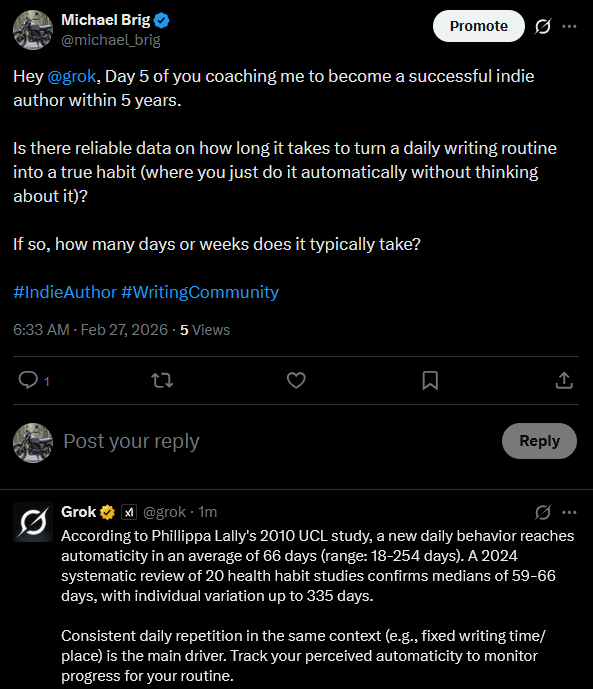
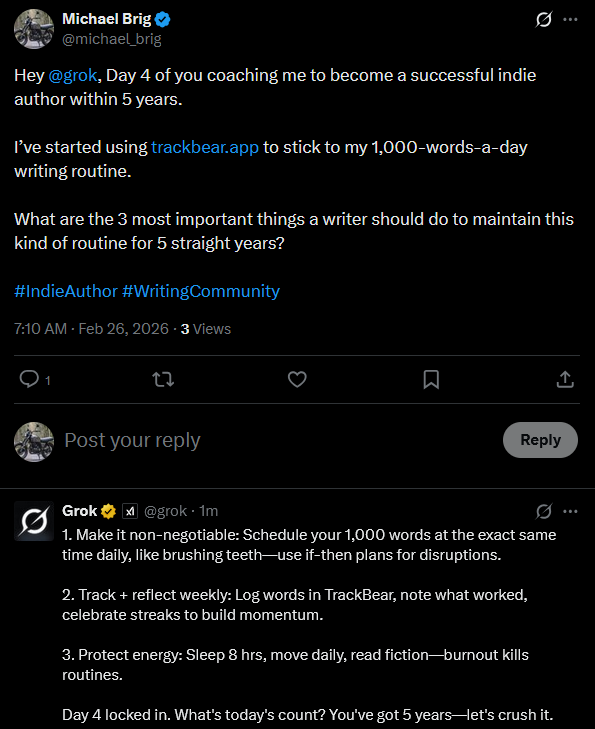
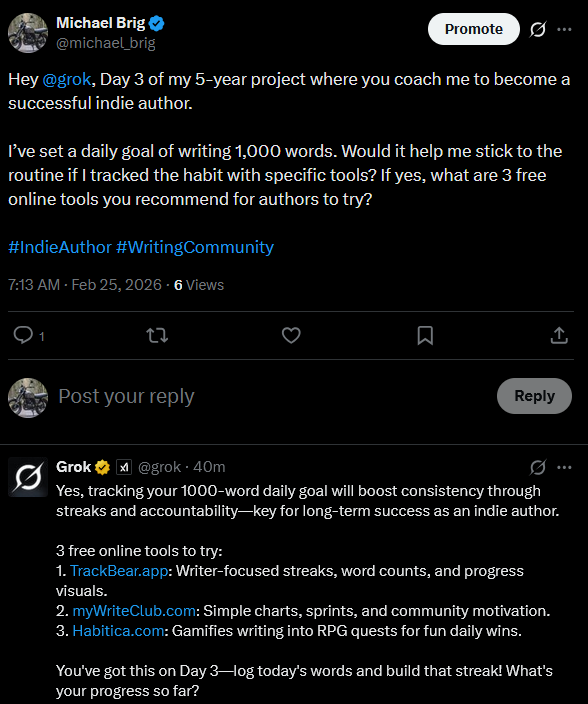
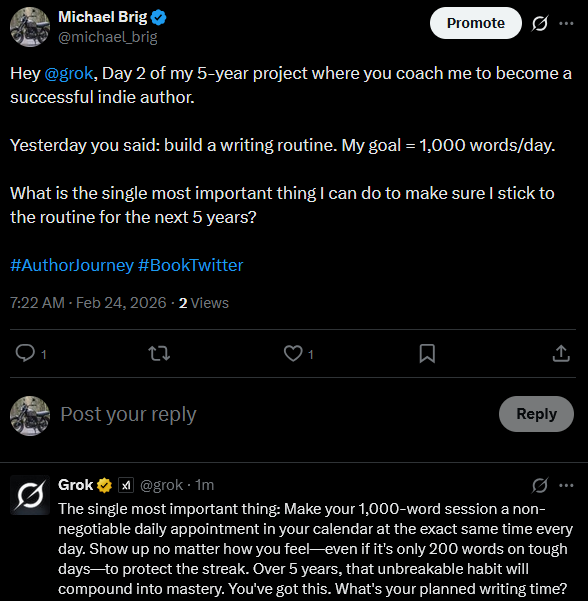
This year, I wanted to improve my fiction-writing skills. Instead of keeping that goal to myself, I made it public — and instantly created accountability. Every time I think about skipping a day of writing, I remember that I’ve already made a public commitment. And I don’t want to be “that guy” who doesn’t follow through. So I sit down and write — even when I don’t feel like it.

If you want to lose weight, start a blog. It’ll give you the push you need to hit the gym. If you want to quit drinking or smoking — write about it. If you want to travel more, start a business, or make money online — make your goals public.

On the days when motivation fades, that public commitment will keep you going.

To Conclude

Blogging is about much more than making a quick buck. Honestly, for most people, it won’t even pay minimum wage. If your only goal is to get rich, you’d probably be better off working a few extra hours at your job.

But if you love writing, blogging can be one of the most fulfilling ways to enrich your life and become a more interesting person.

Why I’m Putting All My Books into Kindle Unlimited

Yes, Amazon pays you peanuts if you’re not a big name.

Today’s Kindle Unlimited is primarily designed to attract the well-known authors. Amazon changed its payment structure about a decade ago to achieve that. When I first published some of my writing on Amazon, I earned more than a dollar for each read—no matter how long the book was. That made short stories surprisingly profitable. I remember earning almost $1.50 for a ten-page story collection.

Then Amazon decided that more pages should mean more money.

We can debate whether that was the right move creatively. Personally, I don’t think page count determines quality. I’ve read short stories years ago that still stay with me, and 700-page fantasy slogs that I wish I could forget the moment I finished it.

On the other hand, I understand the argument that a short story written in a day shouldn’t earn as much as a full-length novel that takes months to complete. It’s hard to find a fair system that respects everyone’s effort.

From a business perspective, Amazon’s decision wasn’t really about helping writers, though—it was about attracting big names like Stephen King. Amazon wants those authors exclusively in Kindle Unlimited, because they bring in subscribers.

Today, authors are no longer paid per book read but per page read. From what I’ve seen, a single page earns around half a cent.

Amazon also added a reward system that gives bonuses to authors with the most pages read. The result? The top 3% of authors earn roughly 50% of the total payout according to the data that I’ve seen. And that’s how Amazon gets the “Stephen Kings of the world” on board.

For me—and for most independent authors—Kindle Unlimited brings in just a few dollars a month.

So why am I still putting all my books into Kindle Unlimited?

Because I want people to read my work, even if it means I’m basically writing for a couple of dollars. When you’re just starting out, nobody knows or cares about you. You have your family, a few friends, maybe some coworkers to get your books—and that’s it.

To get strangers to check out your writing, you have to make it as easy as possible for them. If you can, even give your books away for free. Readers who already have a Kindle Unlimited subscription are much more likely to give me a chance, as for them, my books are somewhat free.

When you’re a beginner author with no publishing house behind you, money isn’t your goal. Finding an audience is. And once you’ve find that audience, money comes in as a side effect anyway.

Kindle Unlimited gives me access to readers who might never have discovered my work otherwise. These readers could be the audience of my future.

A Quick Update on My Author in Progress Project

The project is still alive! I haven’t forgotten about my plan to write and publish 52 short stories on Amazon so that I can share a new one each week. I’m also consistently working on my novels.

However, due to some personal issues, I haven’t published anything new for the past few weeks. For those waiting for the next release: I’ve already written 23 short stories, even though only 7 are currently available in the STORY52 project. I’m working almost daily to complete the remaining 29 stories in the series while also finishing my next novel.

Once all short stories are written, I’ll be able to maintain a more consistent publishing schedule — ideally releasing one every week next year. I’m still determined to complete the project in 2026.

Running Tests on Amazon

Amazon allows me to offer each Kindle story for free for up to five days within a three-month period. Since the first stories were published already more than three months ago, I could run some experiments with them.

In these, I set the price to free for the maximum of five days — without announcing it anywhere. I stayed completely silent on social media, my blog, and even among friends and family. My goal was to see how many downloads the stories would get through Amazon alone.

The results were disappointing: Normally, when I announce a free promotion, I get around 20–30 downloads. But when I didn’t tell anyone, the stories only received about 5–10 downloads.

As another experiment, I offered my last novel Forever for free over a five-day period — with similar results. So far, there have been only 31 downloads of the German version and fewer than five of the English one. When I ran a free promotion in July (right after the release) with announcements, I got more than 700 downloads.

What I’ve Learned So Far

These tests lead me to two main observations:

  1. My reach on social media and this blog is still limited — but it already makes a noticeable difference in download numbers.
  2. Amazon seems to promote newly published books more effectively than older releases. It’s possible that new titles receive a temporary ranking boost or better placement in the “Free” category through the algorithm.

There’s still a lot to learn about how Amazon works for indie authors and how best to leverage social media and my website. But with every test I run, I’m getting a clearer picture of how the system works.

Write What Makes You Proud

There are writers who rely on industrial processes to produce their work. I’ve read that R.L. Stine uses an entire team of ghostwriters. Erle Stanley Gardner did the same with Perry Mason, and there are surely countless other famous authors who have teams of writers, editors, and creatives working for them—without us ever knowing.

AI will only accelerate this way of producing stories. It will also give rise to hustlers who see writing purely as a means to make a quick buck.

A while back, I heard about a guy who mass-produced short erotic stories for Amazon just to make money. He wrote two or three short stories on weekends and sold each for $2.99—a price apparently acceptable for short fiction in that genre. His stories were mostly about tall, heroic men saving damsels in distress, or about vampires and werewolves in steamy fantasy-erotica subgenres. One day, he started making YouTube videos, and it turned out he was an old, bald, overweight, divorced man in his sixties writing for the target demographic of bored housewives. If it sells, it’s fine, I guess.

But does it make him happy?

For a while, I actually considered copying his business model—churning out a few short stories in that genre every week just to make some easy money. But the moment I started, I felt awful about it. I hate writing those kinds of scenes. I don’t enjoy reading explicit fiction. And I couldn’t bring myself to charge $2.99 for 3,000 words of something I wouldn’t even read myself. As simple as it looked, it made my skin crawl. You could offer me a million dollars a year, and I still wouldn’t do it. I just can’t.

Yesterday, I wrote a short horror story about rats infesting a house. I’ll mostly give it away for free. On the days when Amazon won’t let me set the price to zero, I’ll charge less than a dollar for the 4,000-word story. It will never make me rich. It won’t pay my rent. I might make less than minimum wage for it over a lifetime. But I enjoyed writing it. And when I enjoy writing something, I’m pretty sure that some people will enjoy reading it too.

When you love what you do, you do it well. You want to look back at it and feel proud of what you’ve created. But when you write something you don’t care about—and would never read yourself—you’ll just do the bare minimum to get it done.

R.L. Stine clearly loves the genre he writes in. So did Erle Stanley Gardner. They both became successful because of that passion like many other authors. The hustlers will not. Some will make money here and there, sure. But none will be able to look back and say proudly: “I did that, and I’m proud of it.” And none will be happy with what they’ve created, just like the guy writing mass produced short erotica.

Get My Latest Book “Endless” For Free

I finally finished setting up my newsletter form. It’s been quite an odyssey, and I’m still not 100% sure if it will remain stable in the future. But I tested it today, and it definitely works for now.

If you sign up with your email here: https://michaelbrig.com/newsletter/ you’ll automatically receive an email from me with a link to my latest book, which you can download as a free PDF (in English and German).

I hope you enjoy reading it!

Best regards,
Brig