A Lesson from Star Trek: Starfleet Academy

I’m a Trekkie. I fell in love with the franchise during the Next Generation era and regularly went to the theater to see the feature films in the 1990s.

However, during J.J. Abrams’ reboot films, I gradually lost interest. When Discovery was announced, I decided to give it a try—but I stopped watching after two episodes. I never even checked out the other “new” Star Trek iterations. Maybe I will someday.

Even though I haven’t seen the latest attempt to revive the franchise—the Starfleet Academy series—I can already understand why so many people seem upset about it.

From the clips I’ve watched and the reviews I’ve read, it appears that the established brand has once again been used as a mask. Behind that mask is something that doesn’t feel like the Star Trek many fans once knew. Instead, it seems to contain stories the creators wanted to tell anyway—stories that might not attract much attention without the Star Trek label attached.

The problem with this approach is that it may buy you a season or two, but eventually fans recognize that, despite the branding, they aren’t really getting Star Trek. At that point, interest fades, and the show gets cancelled and the movies become busts.

We’ve seen this happen before—not only with Star Trek, but also with other major franchises. The pattern feels familiar enough that it’s easy to predict where Starfleet Academy might be heading.

That said, I hope I’m wrong. I still love Star Trek and want future series to capture what made it so special in the 1990s. But again, I haven’t watched a single episode of Starfleet Academy, but the online discussions surrounding it seem to echo the same concerns seen in other modern franchise shows.

The broader lesson for storytellers is: Write your own stories. Create your own worlds. Develop your own characters. If a story can’t generate interest on its own, attaching it to an established franchise won’t magically make it compelling. It will just expose weak writing and destroy the fans’ love for the franchise itself.

Brands like Star Wars and Star Trek have endured for decades. Whether they can fully recover from this era of horrible storytelling remains to be seen.
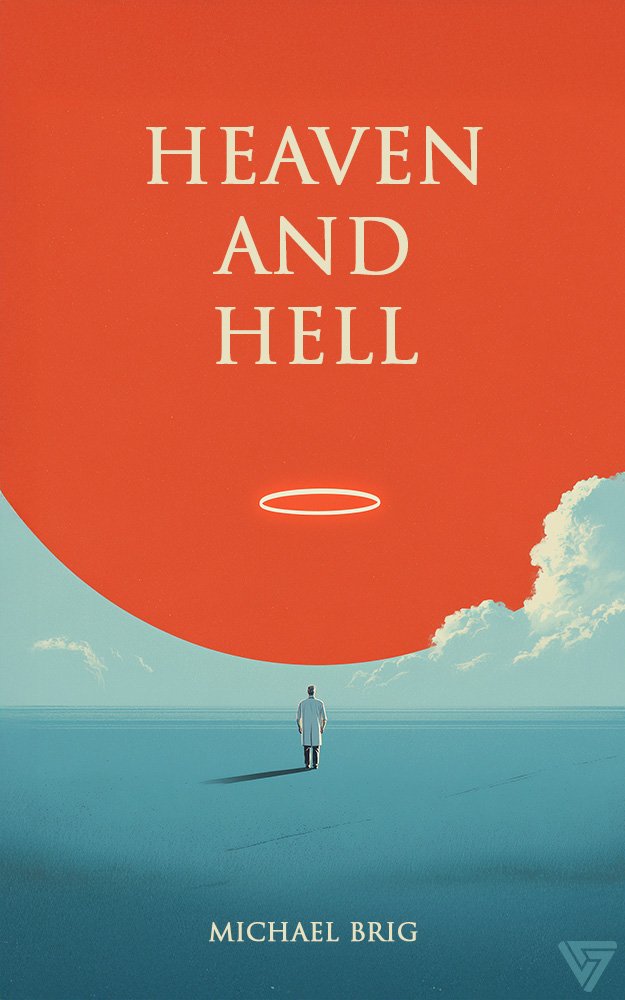
Get My Latest Short Story Heaven and Hell for Free (STORY52 No. 14)

Won’t stop, can’t stop. Monday is free book day on my site. Here is number 14 of my short story series STORY52. Grab a copy at $0 until Friday right here:

US | https://www.amazon.com/dp/B0GN9MLJVV
DE | https://www.amazon.de/dp/B0GN9YC2FB

Synopsis:

Jakob believes he has lived a life that grants him entry into heaven. But God seems to have a very different understanding of what kind of life truly earns that admission.

A philosophical short story by Michael Brig. Approximately 1,000 words long.

Please leave me a review on Amazon after reading, thanks.

A Lesson from the Movie Heretic

What a great first half this movie had. It was novel, sharp, suspenseful, and all-around compelling. Beautiful storytelling and confident filmmaking. And then… the second half began.

I’ve always liked movies with a limited setting. Constraints often force creativity. Try writing a story in which no one can speak. Imagine a story that takes place entirely inside a car. Or one that features only a single character.

Limitations like these instantly spark curiosity and suggest a strong, focused premise.

Heretic takes a similar approach, limiting its setting to a single house with only three characters. And for about an hour, the filmmakers execute this premise wonderfully. I was genuinely on the edge of my seat, eager to discover where it would all lead. Framing a classic captivity-horror scenario within a theological debate was a refreshing idea. It gave the film a unique identity. Well done.

But after that first hour, everything slowly falls apart. The tension weakens, the focus blurs, and we’re left with a lackluster resolution in the final ten minutes. To bring the story to its conclusion, the film even abandons logic and internal consistency, relying on one deus ex machina after another.

Heretic is a great example of a story built on a strong — perhaps even brilliant — idea that works beautifully for half a film, only to lose its way because the ending can’t live up to the premise.

And that dynamic makes Heretic feel like a let down despite it being one of the best movies of the last couple of years.

Having a great idea is winning half the battle. But if you can’t carry that idea through to a satisfying conclusion, your audience will feel betrayed.

Interestingly, the opposite can also be true. The movie Barbarian, which operates in a similar genre, had the reverse effect on me. During its first half, I was close to losing interest. But then the story took a bold and unexpected turn, delivering a much stronger second half. When the credits rolled, I didn’t feel disappointed — I felt rewarded.

The lesson is simple: Once you’ve found a great idea for a story, don’t fully commit to developing it until you’ve found an ending that is just as strong — or even stronger.

Because in storytelling, how you finish often defines how your audience remembers the whole experience.

STORY52 Project Update February

My short story project is progressing really well. Today, I’ve reached another important milestone that keeps the entire project on track for completion this year.

Since the beginning of the year, I’ve designed all 52 book covers — roughly one cover per day. Today, I officially completed that phase of the process.

Here’s the current status of the project (out of 52 stories):

  • 52 book covers designed
  • 52 stories written
  • 18 stories edited
  • 18 stories translated
  • 13 stories published

If I can maintain the one-story-per-week release schedule, Story No. 52 will be released on November 9, 2026. That gives me a small buffer — about seven weeks until the new year starts — in case I miss a Monday somewhere along the way.

Once the project is complete, it will free up time to focus on something new. I might explore publishing short stories in magazines or e-zines to reach new readers — we’ll see.

The good news is: STORY52 is absolutely doable this year.

If you’ve missed one of the free giveaways, don’t worry. I’ve planned to offer each story as a free download for five days, repeating once per year — indefinitely. So if you follow me here on the website, on X, or sign up for the mailing list, you won’t miss any of them. Within a year, you’ll be able to collect all 52 stories at no cost — guaranteed.

Here’s the list of the stories already published:

  1. Black Market Dreams (US – DE)
  2. The Last Portrait (US – DE)
  3. The Companion (US – DE)
  4. Statues (US – DE)
  5. Those who go to war (US – DE)
  6. The Red Button (US – DE)
  7. The Asylum (US – DE)
  8. Protocol Twilight (US – DE)
  9. Killtime (US – DE)
  10. The Last President (US – DE)
  11. The Wheel (US – DE)
  12. The Equation (US – DE)
  13. Turing-Test (US – DE)

The Importance of Having a Routine

Yesterday, I didn’t post on my blog. I had the time, I had a stable internet connection, and I even had plenty of ideas saved in my swipe file. Yet I still didn’t write anything. The simple reason is… I forgot.

I recently moved. In my new place, I have a bigger basement for my training equipment, which means I no longer need to go to the gym. I can simply work out at home. Since the move, I haven’t missed a single day of training. I think it’s because it’s so easy to walk down a few stairs and start exercising that it quickly became a routine.

That’s the same way I also approach writing.

Some people aim for a certain word count each week. Others write six days in a row and take Sunday off. Some crazy authors can sit down only when inspiration strikes, then not write again for days or even weeks. Whatever works for you is great — stick with it.

But for me, I have to write every day to make it a habit. If I miss a single day, it becomes harder to start again the next day. So if I want to make my life easier, I simply shouldn’t skip a day.

For blogging, I need to create a routine as well. Otherwise, I might forget to write — and once I miss a day, it becomes harder to begin the next post.

Before going to bed, I usually watch some sports. While watching a Super Bowl rerun, seeing the Mavs miss the playoffs, or witnessing my favorite soccer club, Borussia Dortmund, being beaten by Bayern Munich yet again, I can easily write one of my short 30-minute blog posts.

Once the routine is established, daily blogging should become effortless — just like everything else I do as part of my daily routine.